CryoPen Milia Removal: Can It Cause Scarring Telford?
Those tiny white bumps around your eyes, cheeks or forehead can be surprisingly stubborn. If you’ve tried changing your skincare routine and they still haven’t gone away, you may have milia.
Although milia are generally harmless, some people choose to have them removed for cosmetic reasons.
CryoPen treatment is one option you might have come across. But before booking an appointment, it’s worth asking an important question: Can CryoPen milia removal leave scars?
The short answer is yes. Scarring is a possible complication of cryotherapy, although it doesn’t happen to everyone.
At LA LIPO, we believe you should understand what a treatment involves, including its limitations and potential risks, before deciding whether it’s right for you.
What Are Milia?
Milia are small, firm cysts that form when keratin becomes trapped beneath the skin’s surface.
They often look like tiny white or yellowish bumps and commonly appear around the eyes, across the cheeks, on the forehead or around the nose.
Unlike spots, milia aren’t caused by blocked pores in the same way as acne, and squeezing them at home isn’t advisable.
Some milia disappear without treatment, while others remain for months or longer.
They’re usually harmless and don’t need removing unless you would prefer to have them treated.
If you’re unsure whether a bump is milia, arrange an appropriate assessment before considering cosmetic removal.
How Does CryoPen Milia Removal Work?
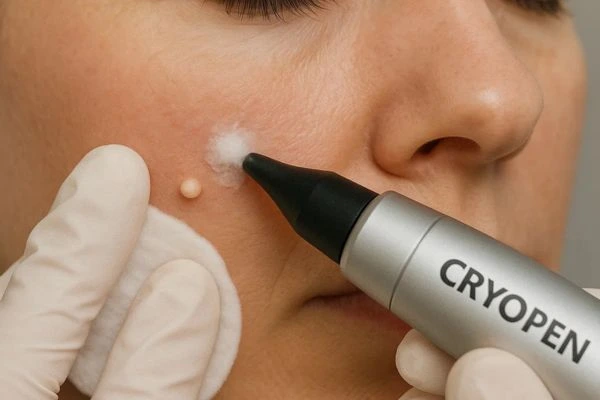
CryoPen is a handheld cryotherapy device that delivers a concentrated, very low temperature to a targeted area of skin.
Depending on the device, a pressurised gas such as nitrous oxide is used to produce the freezing effect.
The cold damages the targeted tissue, which then goes through a healing process. A crust or scab may develop before the treated area gradually settles.
Cryotherapy can be considered for certain milia, but it isn’t necessarily the most appropriate removal method for every person or every location. Particular care is needed around the eyes, where the skin is delicate, and treatment suitability depends on the milia’s exact position.
At LA LIPO, we assess suitability before any cosmetic freezing treatment.
Learn more about our Cryotherapy Skin Lesion Removal service.
Can CryoPen Milia Removal Cause Scarring?
Yes, CryoPen treatment can cause scarring.
Cryotherapy deliberately freezes skin tissue, so some reaction afterwards is expected. The treated area may become tender, swollen or discoloured, and a blister or scab can form.
Most people undergoing appropriately selected superficial cryotherapy do not develop significant scarring, but permanent changes are possible.
A scar may appear as a small pale patch, a change in skin texture or, less commonly, a raised area.
The treated skin may also become lighter or darker than the surrounding skin. These pigmentation changes are not necessarily scars, but they can still affect the final cosmetic appearance.
Some marks gradually fade. Others may last much longer or become permanent.
The risk depends on several factors, including freezing depth, treatment location, skin characteristics, and individual healing response.
What Can Increase the Risk of Scarring?
Not everyone responds to cryotherapy in the same way.
Depth and duration of freezing
The longer or deeper the freezing, the greater the potential for damage to surrounding tissue.
This is one reason the lesion type and treatment technique matter.
Location of the milia
Skin thickness varies across the face and body.
Areas around the eyes need particular consideration, and treatment close to the eyelids may not be appropriate with certain devices or practitioners.
How Your Skin Reacts to Treatment
Everyone’s skin heals differently. Some people find that even a small injury leaves a lasting mark, while others heal with little visible change.
If you have a darker skin tone, freezing may leave patches that look lighter or darker than the surrounding skin. These changes can take time to fade and, in some cases, may be permanent.
Infection during healing
An infection can interfere with normal healing and may increase the likelihood of a lasting mark.
If the treated area becomes increasingly painful, feels hot, develops spreading redness or starts producing discharge, it could be a sign of infection. Seek medical advice rather than waiting for it to settle on its own.
Touching or Picking at Healing Skin
As the skin heals, you might notice a small scab forming over the treated area. Although it can be tempting to pick at it, doing so may damage the new skin underneath and increase the chance of scarring.
It’s tempting to remove a scab when it starts lifting away from the skin, particularly when the treated area is on your face.
However, picking can damage the healing skin and increase the risk of scarring.
What Happens to Your Skin After CryoPen Treatment?
You shouldn’t expect the treated skin to look completely normal immediately afterwards.
During the first few days, you may notice redness, swelling, tenderness or a small blister.
A crust or scab may then develop as the skin heals.
Some superficial treatment areas heal within a couple of weeks, although recovery can take longer depending on the treatment site and individual response.
Even after the surface heals, the skin may remain pink, lighter, or darker than before.
Pigmentation changes can take considerably longer to settle and may occasionally be permanent.
Your practitioner should explain the expected healing process and provide suitable aftercare instructions before you leave your appointment.
How Can You Reduce the Risk of Scarring After Milia Removal?
No treatment can guarantee scar-free healing, but choosing the right treatment and following aftercare can reduce avoidable complications.
A few sensible precautions include:
- Have the bumps properly assessed. Not every small white facial lesion is milia, and you shouldn’t freeze uncertain skin changes without an appropriate diagnosis.
- Discuss your skin history. Tell your practitioner about previous scarring, pigmentation changes, healing problems and relevant medical conditions.
- Follow your aftercare instructions. Your practitioner should explain how to clean and protect the area while it heals.
- Leave blisters and scabs alone. Avoid picking, scratching or attempting to remove them yourself.
- Protect healing skin from sunlight. Follow sun protection advice and avoid unnecessary UV exposure.
- Seek advice if healing seems unusual. Increasing pain, spreading redness, discharge or other concerning changes deserve medical attention.
These measures can support recovery, but they cannot eliminate the possibility of scarring or changes in skin colour.
Is CryoPen the Best Way to Remove Milia?
Not necessarily.
The best approach depends on the type of milia, where they’re located, your skin characteristics, and any relevant medical history.
Other methods may include professional extraction with sterile equipment or other procedures performed by a properly trained healthcare professional.
Some milia disappear without treatment, so removal isn’t always necessary.
Each method has its own limitations and risks.
CryoPen shouldn’t automatically be described as safer or more effective than extraction or other techniques without reliable evidence supporting that comparison.
A consultation can help determine whether cosmetic cryotherapy is suitable or whether another approach is more appropriate.
Can Milia Come Back After CryoPen Removal?
Yes.
Even when a particular milium has been successfully treated, new milia can develop in the same general area or elsewhere.
In some cases, the original lesion may not clear completely, and further assessment or treatment may be needed.
Cryotherapy does not prevent new milia from forming.
If you’re experiencing persistent or widespread milia, a dermatologist or suitable healthcare professional can help investigate possible contributing factors.
CryoPen Milia Removal at Home with LA LIPO

LA LIPO provides mobile cosmetic treatments in selected locations across the UK.
For suitable skin blemishes, you may be able to arrange a treatment appointment in your home rather than travelling to a clinic.
Before proceeding, we need to confirm what the skin lesion is, whether it is suitable for cosmetic cryotherapy, and whether we can carry out the treatment safely at your location.
Not all milia are suitable for CryoPen removal, especially those close to sensitive structures such as the eyes.
Our team can discuss the available service, assessment requirements, potential risks and what to expect afterwards.
Interested in finding out whether CryoPen treatment may be suitable for your milia?
Contact LA LIPO to discuss your enquiry and home appointment availability in your area.
Frequently Asked Questions About CryoPen Milia Removal and Scarring
1. Does CryoPen milia removal always leave a scar?
No. Scarring doesn’t occur after every treatment, but it remains a recognised risk of cryotherapy.
Some people heal without a noticeable lasting mark, while others experience changes in pigmentation or skin texture.
2. Can CryoPen cause permanent skin damage?
Yes, permanent scarring or changes in skin colour are possible.
The likelihood depends on the treatment technique, location, depth of freezing and individual healing response.
3. Is CryoPen safe for milia around the eyes?
The area around the eyes requires particular caution.
Cryotherapy may not be suitable for milia close to the eyelids or other sensitive structures. Suitability depends on the exact location, equipment and practitioner’s competence.
A dermatologist or appropriate healthcare professional may recommend a different approach.
4. How long does skin take to heal after CryoPen milia removal?
Some superficial treatment sites heal within one to three weeks, but recovery varies.
Deeper reactions, pigmentation changes or complications can take considerably longer to settle.
5. Can CryoPen leave dark marks on the skin?
Yes. Post-inflammatory hyperpigmentation can occur after freezing, leaving an area darker than the surrounding skin.
Cryotherapy can also cause lighter patches, known as hypopigmentation.
Both changes can be more noticeable on darker skin tones, and some may be permanent.
6. Is CryoPen milia removal painful?
You may experience stinging, burning or discomfort during freezing, followed by tenderness afterwards.
Discomfort varies by individual and treatment location.
7. Can I wear makeup after CryoPen milia removal?
Avoid applying makeup directly to broken, blistered or scabbed skin unless your treating professional advises otherwise.
Before you leave your appointment, ask your practitioner how long you should wait before using your usual skincare products or applying makeup again.
8. Can I remove milia myself without leaving a scar?
It’s best not to try removing milia yourself. Unlike ordinary spots, they don’t simply pop when squeezed. Trying to dig them out with a needle or sharp tool can damage your skin, cause an infection, and leave a scar.
If the bumps bother you, seek advice from a qualified professional rather than trying to remove them yourself.
9. What should I do if a CryoPen treatment leaves a mark?
A temporary change in skin colour doesn’t necessarily mean you’ve developed a permanent scar.
However, if you’re concerned about the area’s appearance, arrange a review with your treating practitioner or another suitable healthcare professional.
Seek prompt medical advice if you develop increasing pain, spreading redness, pus or other signs of infection.
10. Is CryoPen better than professional milia extraction?
Neither method is automatically the best choice.
Professional extraction and cryotherapy use different techniques and carry different risks. The most appropriate method depends on the lesion and individual circumstances.
11. Do milia need to be removed?
Usually not.
Milia are generally harmless and may disappear on their own. Cosmetic removal is a personal choice once the bumps have been appropriately identified.
Understanding the Risks Before Choosing Milia Removal
If you’re considering CryoPen treatment because you’re tired of seeing stubborn white bumps on your skin, it’s understandable to want to know what the finished result might look like.
But removal isn’t always necessary, and even a small area of freezing can leave a temporary or lasting mark.
Before deciding, ask about the risks of scarring, changes in pigmentation, alternative treatments, and whether your milia’s location makes cryotherapy appropriate.
Contact our team at LA LIPO to discuss the cosmetic services available in your area and the next steps for assessing suitability.
Explore LA LIPO Cryotherapy Treatments
Important information: We’ve put together this guide to help you understand milia and what to consider before choosing CryoPen removal. It isn’t intended to replace advice from a medical professional or confirm what type of skin lesion you have. Freezing the skin can sometimes cause blisters, infection, scarring or lasting changes in skin colour, and treatment may not remove the milia completely. Everyone’s skin responds differently, so results cannot be promised. If a bump hasn’t been properly identified, looks unusual or has started changing, have it checked by a suitable healthcare professional before considering removal. Treating skin close to the eyes requires extra care, and CryoPen may not be appropriate in these areas.